
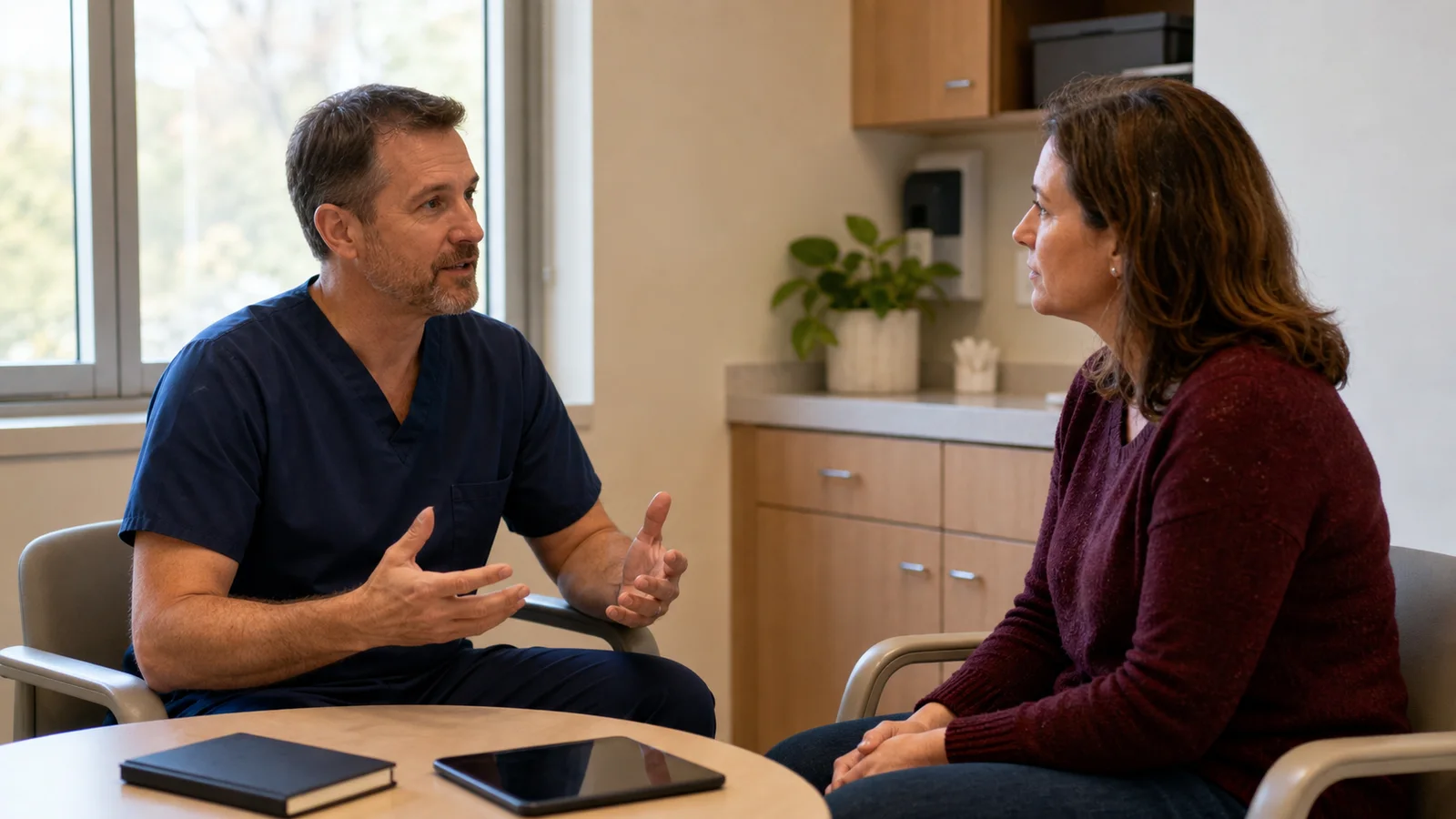
A lot of clinicians we talk to hesitate to mention that they use AI at all, worried it'll sound like they're outsourcing judgment or that a patient will assume less care went into their chart. In our experience the opposite tends to be true. Most patients don't mind that you use a tool to help with paperwork. What they want to know is that their information is still handled carefully, and that you're still the one making decisions.
You don't need a legal script
This isn't a session-recording device that needs a formal consent conversation before you turn it on. It's closer to using a word processor instead of a legal pad: a drafting aid you use between or after a visit, not something present in the room. Most practices don't need anything more formal than a plain-language mention, unless their own policies or state requirements say otherwise.
A few ways to say it
Keep it short and match your own voice. A few starting points:
- "I use a tool to help me draft notes faster so I can spend more time with you and less time typing afterward."
- "Some of my documentation is drafted with the help of AI, then reviewed and finalized by me before it goes in your chart."
- "I use software that's built specifically for clinical work, with your information handled under a formal privacy agreement."
None of these require a pause in the conversation or a signature. They're closer to mentioning which EHR you use than to disclosing something sensitive.
What to do if a patient asks more
Some patients will want more detail, and that's a good sign, not a problem. Two things are worth being ready to say plainly: that identifying details are tokenized before they reach any underlying AI model, and that you review and finalize everything before it becomes part of their record. If a patient wants the full technical picture, ourdata journey page walks through it step by step.
What this tool doesn't change
Using AI to help draft a note doesn't change who's responsible for what's in the chart. You're still reviewing every draft before it's final, still deciding what belongs in the record, and still the person your patient is actually talking to. The tool speeds up a specific part of your day. It doesn't replace the judgment that made you a clinician in the first place.